Action Plan Template: Turn Goals into Real Results
You know that feeling when you have a big goal—maybe launching a new product line, finally organizing your creative studio, or scaling your side hustle—but the sheer scope of it leaves you stuck? You’re not alone. The gap between a brilliant idea and a finished project is often filled with overwhelm. That’s exactly where a structured approach becomes your most powerful tool. The Action Plan Template isn't just another spreadsheet; it's a dynamic framework designed to transform abstract ambitions into clear, manageable steps. Think of it less as a rigid document and more as a strategic partner for your workflow.
More Than Rows and Columns: The Anatomy of Effective Planning
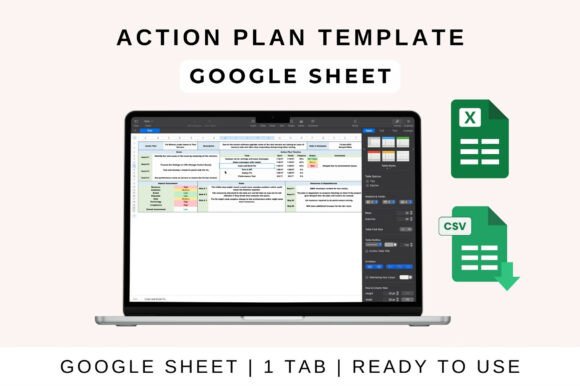
At its core, this template is built on clarity. It features dedicated columns for tasks, responsibilities, deadlines, priority levels, and progress tracking. But its real strength lies in its clean, customizable format. Unlike cluttered project management tools, its visual simplicity is intentional. The layout provides immediate visual hierarchy, allowing you to see at a glance what needs attention, who is handling it, and when it's due. This modern typography and minimalist design philosophy isn't just about looking good; it reduces cognitive load, letting you focus on execution rather than deciphering your own plan. It’s a design asset that works silently in the background, bringing order to chaos.
The personality of the Action Plan Template is practical, professional, and adaptable. It’s the digital equivalent of a well-organized workshop—everything has a place, and the system encourages flow. Whether you're a graphic designer mapping out a client's brand identity project, an entrepreneur planning a web design launch, or a blogger outlining a content calendar, the template’s style is a neutral yet powerful canvas. It doesn’t impose its own voice on your project; instead, it provides the structure for your voice to come through clearly. This makes it incredibly versatile for everything from personal goals to complex team planning.
Where Structure Meets Strategy: Practical Applications Across Industries
Consider a marketer developing a social media campaign. The Action Plan Template becomes the central hub for every deliverable: creating social media graphics, writing copy, scheduling posts, and analyzing metrics. Assigning team members to specific tasks and setting clear deadlines ensures accountability. The priority column helps distinguish between critical-path items and those that can be adjusted, a nuance often lost in less structured systems. For a small business owner, it’s invaluable for managing inventory restocks, coordinating with suppliers, and planning promotional events—all while keeping an eye on the bottom line.
For content creators and publishers, the template shines in editorial design and production workflows. Mapping out the journey from article ideation and research to drafting, editing, visual pairing, and final publication becomes a visual timeline. The progress tracking column offers a satisfying sense of momentum, which is a powerful motivator during long-term projects. Even crafters and hobbyists can use it to break down complex projects—like designing a new line of handmade goods or organizing a community event—into achievable phases. The template’s compatibility with Google Sheets, Microsoft Excel, and Apple Numbers means it fits seamlessly into your existing ecosystem, whether you’re collaborating in real-time with a remote team or working solo from your desktop.
Integrating the Template: A Guide to Seamless Implementation
Getting started is straightforward, but a few best practices will maximize its value. If you’re using Google Sheets, upload the file to your Drive. The real power here is collaboration. You can share the sheet with your team or a client, and everyone can update progress in real-time. The built-in formulas will auto-calculate totals and status, keeping the overview accurate without manual effort. Customize the categories to fit your specific project—add rows for research phases, client feedback rounds, or quality assurance checks. The flexibility is key.
For those who prefer Microsoft Excel, download the file and enable editing. The offline functionality is perfect for deep-focus work sessions. Input your data, and leverage Excel’s robust features to sort tasks by priority or deadline with a few clicks. You can even create simple Gantt-chart-style visualizations using the date columns for a more graphical view of your timeline. The core principle remains: enter your goals, break them down, assign ownership, and track everything. This process of methodical breakdown is what bridges the gap between planning and doing.
Ultimately, the Action Plan Template is about creating clarity and building forward momentum. It’s a testament to the idea that the right design asset—one that combines intuitive structure with flexible customization—can fundamentally change how you approach your work. By making every step visible and every responsibility clear, it turns daunting objectives into a series of achievable victories. Stop letting your best ideas languish in a vague to-do list. Give them the structure they deserve, and watch your progress unfold.